
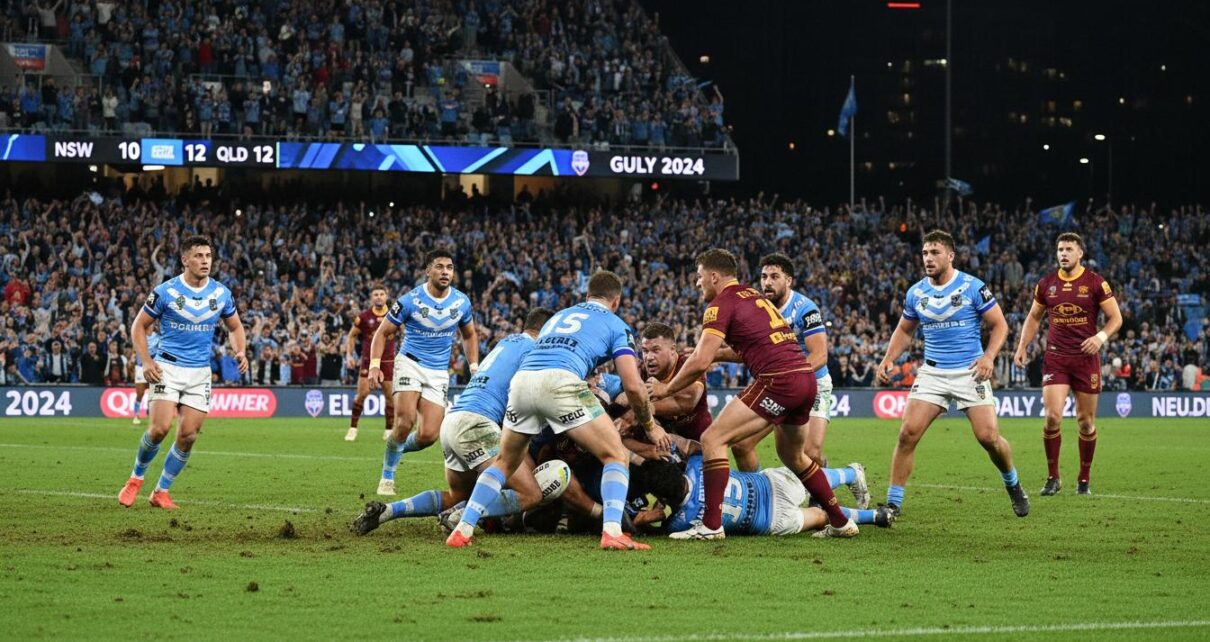
Every winter, New Zealand sports fans brew a late coffee, settle in on a weeknight, and point their eyes across the Tasman. State of Origin Game 2 isn’t just the middle match of a rugby league series—it’s the hinge that swings a campaign open or slams it shut. This guide explains what State of Origin Game 2 is, why it carries so much weight, how it works, and how fans in Aotearoa can watch and make the most of it.
What is
State of Origin is a best-of-three rugby league series between the New South Wales Blues and the Queensland Maroons. The “origin” tag comes from players being picked based on where they first played senior rugby league, not where they currently live or play club footy.
State of Origin Game 2 is the second clash of the series, played a few weeks after Game 1 and a few weeks before Game 3. It often decides the tone of the entire series. If a team wins Game 1, Game 2 can clinch the shield. If they lose Game 1, Game 2 is the desperate counterpunch to drag the series back level. For Kiwis, it’s a midweek late-night event with big hits, sharp tactics, and a level of intensity that spills off the screen.
How it works
The State of Origin series runs in the middle of the NRL season, usually across June and July. Game 2 generally lands on a Wednesday night, with kickoff around 10 pm New Zealand time during winter (NZST). The venue rotates: Sydney and Brisbane are common hosts, but Game 2 is often placed at a neutral big stadium like Melbourne or Perth to spread the spectacle.
Selection revolves around the “origin” rule and current form. Each state names a squad and trims to a 17-player match-day group. Coaches weigh combinations, injuries, and club workloads. Because it sits mid-season, Game 2 selections can be influenced by what happened in Game 1—either doubling down on a winning formula or gambling on fresh legs and new halves.
On-field, it’s NRL rules with Origin intensity. Expect fast middles, tactical kicking, and match-ups settled in moments: a forced dropout, a strip in the ruck, a cool head from the tee. If scores are level after 80 minutes, golden point can decide it. Video review (the Bunker) checks tight calls like grounding and obstruction. Interchange rotations are strategic, with front-row bursts timed around momentum swings and sin-bin risks weighed carefully given the margin for error is razor-thin.
Broadcast-wise in New Zealand, State of Origin Game 2 is typically live on Sky Sport, with streaming via Sky Go and Sky Sport Now. Australian free-to-air feeds are usually geo-blocked for NZ viewers.
Types / examples
Ways Game 2 shapes a series
- The clincher: Team that won Game 1 closes it out 2–0 with a composed performance under pressure.
- The reset: The trailing state rips momentum back with faster ruck speed and a halves switch, setting up a blockbuster decider.
- The epic arm-wrestle: Low-scoring, heavy defence, decided by a penalty or one clean set play late.
Famous Game 2 moments
- Andrew Johns’ playmaking masterclass for NSW in the mid-2000s, a blueprint in controlling tempo and territory.
- NSW clinching the shield in 2014 with a gritty, defence-first Game 2 win in Sydney after years of Queensland dominance.
- NSW levelling the 2022 series in Perth with a statement attacking performance that flipped the narrative after a Game 1 loss.
- Queensland sealing the series in Game 2 in Brisbane in recent years, feeding off a roaring home crowd and kick-pressure masterclass.
Venue patterns
- Home fortress: Brisbane or Sydney crowds can feel like an extra defender on every tackle.
- Neutral cauldron: Melbourne or Perth adds scale and a more balanced crowd, shifting players’ focus purely to execution.
Pros and cons
For New Zealand fans
- Pros:
- Prime-time spectacle with the world’s best league players on one stage.
- A clear storyline—either clinch or comeback—that raises the stakes.
- Accessible coverage on Sky Sport and streaming options.
- Cons:
- Late kickoff for NZ viewers, especially on a school or work night.
- Travel costs if you want to attend in Australia during peak demand.
- Short turnaround to shake off the adrenaline before bed.
For teams
- Pros:
- Clear tactical targets from Game 1 video review.
- Opportunity to adjust combinations and exploit mismatches.
- Chance to seize or save the series with one complete performance.
- Cons:
- High injury and fatigue risk while NRL clubs still need their stars.
- Punishing scrutiny on halves and goal-kickers.
- Travel and short prep windows if venue is neutral or away.
How to use or choose
How to watch State of Origin Game 2 in New Zealand (step-by-step)
- Check the date and venue announced by the NRL and broadcasters. Pencil in a Wednesday night in June or July.
- Confirm coverage on Sky Sport (live) and decide if you’ll watch via Sky Box, Sky Go, or Sky Sport Now.
- Set a reminder. Kickoff is usually around 10 pm NZST. Build in a buffer for pre-game coverage and possible golden point.
- Sort the stream: test your app login and internet speed earlier that evening; update the app if needed.
- Plan your night’s fuel: quick dinner, warm layers, and a strong brew ready by halftime.
- Mute group chats if you’re on delay; otherwise, jump in and ride the swings in real time.
- If you miss it live, look for replays on Sky Sport or on-demand within the platform you use.
Choosing your Origin experience
- At home: Best for comfort and control. Pair the broadcast with real-time stats on your phone if you like data-led viewing.
- Sports bar: Sharpen the atmosphere with fellow night owls. Check closing times in your area before committing.
- Travel to Australia: Book early once fixtures drop. Aim for accommodation near public transport to the stadium. Factor time zones and late-night returns.
What to watch for tactically in Game 2
- Kick pressure on the halves. Field position wins Origin minutes before points arrive.
- Middle rotations. First change in the front row often signals a tilt in momentum.
- Back-five metres. Wingers and centres taking tough early carries set the platform.
- Discipline. Piggy-back penalties turn into repeat sets and scoreboard pressure.
- Goal-kicking. Two points can be the difference in a grind.
Comparison: Game 1 vs State of Origin Game 2 vs Game 3
| Feature | Game 1 | State of Origin Game 2 | Game 3 |
|---|---|---|---|
| Series stakes | Sets the tone and exposes weaknesses | Clincher or lifeline; momentum swing is largest here | Decider if 1–1; otherwise pride and selection signals |
| Typical NZ timing | Midweek, around 10 pm NZST | Midweek, around 10 pm NZST | Midweek, around 10 pm NZST |
| Venue pattern | Home or neutral | Often neutral mega-stadium or opposite state | Often the other state’s home ground |
| Narrative | First look at combinations | Pressure-test of adjustments | Legacy game or consolation |
| Coaching approach | Back trusted combos | Tweak spine, edge defence, bench impact | All-in selections and minutes |
| Selection risk | Measured, reward form | Braver calls if trailing | Win-now gambles |
| Crowd factor | Strong but exploratory energy | White-hot intensity, even at neutral venues | Final push, emotionally charged |
FAQ
When is State of Origin Game 2 usually played?
It typically falls on a Wednesday night in June or early July, about two to three weeks after Game 1. Exact dates are set by the NRL before the season.
What time does it start in New Zealand?
Kickoff is usually around 10 pm NZST during winter. Pre-game coverage begins earlier, and matches can run past 11:30 pm if there are stoppages or golden point.
Where is State of Origin Game 2 played?
Venues rotate. Game 2 is often at a neutral big stadium like the MCG in Melbourne or Optus Stadium in Perth, but it can also be in Sydney or Brisbane depending on the year’s schedule.
How can I watch in New Zealand?
Live coverage is typically on Sky Sport, with streaming via Sky Go (for Sky subscribers) and Sky Sport Now (standalone streaming). Australian free-to-air streams are usually geo-blocked in NZ.
Why is State of Origin Game 2 so important?
It can decide the series if the Game 1 winner backs it up, or it can flip momentum and force a decider. Coaches also reveal their best adjustments here.
Does Game 2 use golden point?
Yes. If scores are level after 80 minutes, golden point extra time can be used to find a winner.
How are players picked for Game 2?
Based on State of Origin eligibility rules and form. Coaches often stick with winning combinations or bring in fresh players after a loss in Game 1.
What should I look for tactically?
Kick chase, ruck speed, edge defence connections, and bench impact minutes. Watch the back three for yardage and the halves for repeat sets.
Is State of Origin Game 2 family-friendly viewing in NZ?
Yes, but it’s late. If kids are keen, consider recording or using on-demand the next day.
What’s the best way to attend from New Zealand?
Book early after fixtures are announced. Look for direct flights to the host city, stay near public transport, and plan for a late-night return from the stadium. Travel insurance and flexible fares help if schedules shift.
Final tips for New Zealand viewers
- Check kickoff again on match day—time zones and broadcast windows can nudge start times.
- If you need a quick next-day catch-up, set your platform to record or confirm on-demand availability.
- Keep an eye on late team changes; Game 2 squads can shuffle within 24 hours of kickoff.
- Enjoy the theatre. State of Origin Game 2 is where belief hardens or cracks. That’s why you stayed up.