
A good toilet disappears into the background until the day it won’t flush, keeps running, or refuses to fit the plumbing in your villa or bach. This guide breaks down how a toilet works, the types you’ll see in New Zealand stores, what to look for when buying, and simple care tips that actually help. Expect local context—WELS water ratings, set-out measurements, S-trap vs P-trap—and straight answers to common questions.
What is
A toilet is a sanitary fixture designed to remove human waste through a water-flush or alternative mechanism to a sewer, septic system, or approved treatment unit. In New Zealand, most homes use dual-flush toilets that conserve water and meet the joint Australia–New Zealand Water Efficiency Labelling and Standards (WELS) scheme.
Key parts of a typical toilet:
- Cistern: the tank holding water ready for the flush
- Flush valve and button: releases water into the bowl
- Pan or bowl: receives waste and sends it to the trap
- Trap: water-filled bend that blocks sewer smells (S-trap to floor outlet, P-trap to wall outlet)
- Seat and lid: comfort and hygiene features, sometimes soft-close or quick-release
How it works
Most New Zealand toilets use gravity-assisted flushing. Press the button and the cistern dumps a measured volume of water into the rim and siphon jet. The rush of water pushes waste through the trap and into the drain. A small pool of water remains in the pan to seal odours.
Water efficiency in NZ
Look for the WELS label. It shows a star rating and the average flush volume in litres. Many dual-flush toilets here are around 4.5/3 litres (full/half), averaging roughly 3.5 litres per use. Higher stars mean lower average water use. The label helps you compare models at a glance.
Dual-flush vs single-flush
- Dual-flush: two buttons, one for liquids (half flush), one for solids (full flush)
- Single-flush: one button, one volume every time—less common in modern NZ homes
Behind the buttons
- Inlet valve (or fill valve) refills the cistern and stops at a set level
- Flush valve seal keeps water in until activated; a worn seal causes a “running” toilet
- Overflow path prevents flooding if the inlet valve fails
Types / examples
Toilets in New Zealand usually fall into these categories. Your plumbing layout (floor vs wall outlet) often decides the shortlist.
By configuration
- Close-coupled toilet: cistern bolts directly to the pan; compact and common
- Back-to-wall toilet suite: pan sits flush to the wall, neater and easier to clean behind
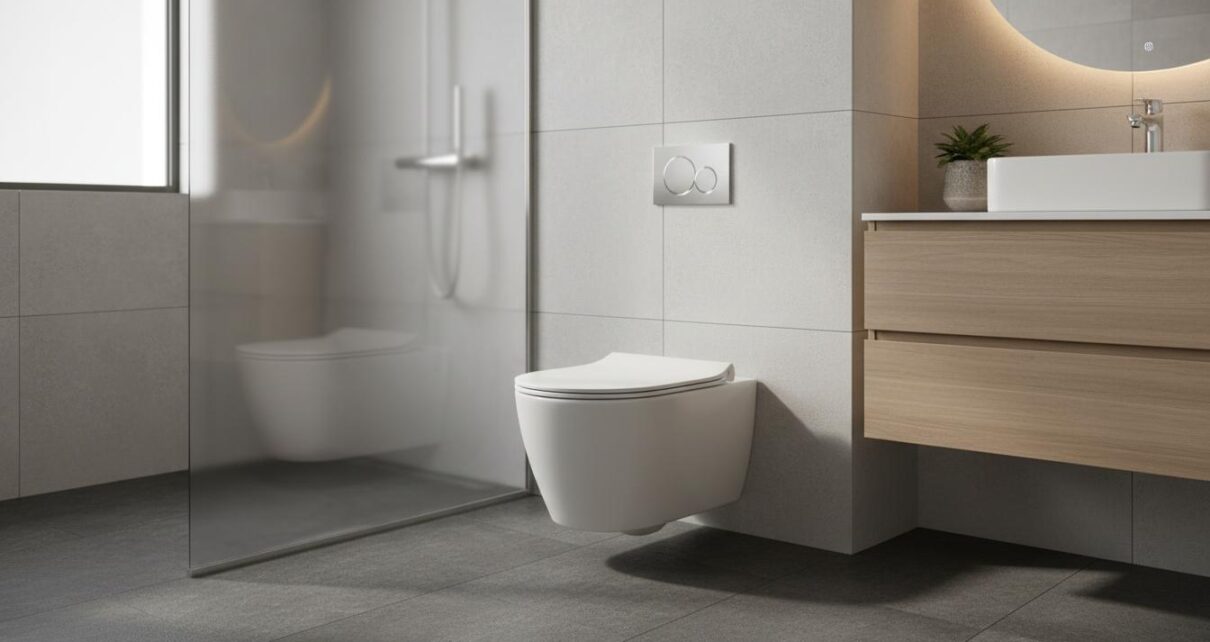
- Wall-hung toilet: pan mounts to a frame inside the wall; the cistern is concealed for a minimalist look
- Concealed-cistern (wall-faced): pan on the floor with a hidden cistern in a cavity or furniture unit
By trap and outlet
- S-trap: outlet goes through the floor—very common in older and many newer NZ houses
- P-trap: outlet goes through the wall—often seen in newer builds and apartments
By flushing design
- Rimless toilet: easier cleaning, fewer places for grime to hide
- Standard rim: traditional flow around the rim
Special-purpose options
- Comfort-height toilet: slightly taller seat (often around 430–460 mm) for easier sitting and standing
- Smart/bidet toilet seat: warm water wash, heated seat, and dryer; needs power and sometimes backflow protection
- Composting toilet: waterless system for off-grid or remote sites; must follow local council rules for waste handling
- Macerating toilet: uses a small pump to send waste through reduced-diameter pipe; handy where gravity drainage is tricky, needs power
Quick comparison
| Type | Best for | Water use | Pros | Cons |
|---|---|---|---|---|
| Close-coupled | Most renovations and rentals | Usually dual-flush with WELS rating | Affordable, easy to source parts | More joins to clean |
| Back-to-wall | Modern look, easier vacuuming | Dual-flush, 3–4+ WELS stars common | Tidy profile, hides pipework | Check set-out range carefully |
| Wall-hung | Compact bathrooms, accessible cleaning | Efficient models widely available | Floating look, floor clear | Higher cost, in-wall frame and service access needed |
| Concealed-cistern | Designer finishes | As per chosen cistern rating | Quiet, minimal | Plan maintenance access from the start |
| Composting | Off-grid baches, low water sites | Waterless | Saves water, off-grid friendly | Ongoing maintenance, local compliance |
Pros and cons
Benefits of a modern toilet
- Lower water bills: WELS-rated dual-flush models trim everyday use
- Better hygiene: rimless designs, quick-release seats, and quality glazes
- Comfort: quiet-close lids, stable seats, and comfort-height options
- Aesthetics: back-to-wall and wall-hung tidy up small bathrooms
Potential downsides
- Fit issues: the wrong trap type or set-out creates installation headaches
- Cheap internals: low-quality inlet and flush valves fail sooner
- Maintenance access: concealed cisterns need a proper service opening
- Power dependency: smart and macerating toilets need reliable electricity
How to use or choose
How to choose the right toilet (step-by-step)
- Confirm the outlet: check if your current toilet is S-trap (floor) or P-trap (wall).
- Measure the set-out: measure from finished wall to the centre of the waste outlet (S-trap) or from finished floor to the centre of the wall outlet (P-trap). Write it down.
- Note the water inlet: bottom inlet (in the cistern base/side) or back inlet (rear of the cistern). This affects hose routing and aesthetics.
- Decide the style: close-coupled, back-to-wall, wall-hung, or concealed cistern—balance looks, space, and budget.
- Check WELS: compare star ratings and the average flush volume on the label. Aim for high efficiency without compromising flush performance.
- Consider cleaning: rimless bowl, quality glaze, and quick-release, soft-close seat save time.
- Think comfort: seat shape (round vs elongated), height, and noise levels (in-wall cisterns can be quieter).
- Plan compliance: in NZ, sanitary plumbing work must be done by a licensed plumber. If you’re changing layout, talk to your plumber early.
- Confirm parts and support: choose brands with readily available spares through NZ suppliers to avoid long waits.
- Book installation: schedule with a licensed plumber and confirm disposal of the old toilet.
Common NZ renovation tips
- Allow for set-out ranges: many back-to-wall suites include adjustable pan connectors that handle common NZ set-outs (often in the 140–165 mm range). Always check the specification sheet.
- Flooring changes matter: new tiles can shift the set-out and pan height. Measure after flooring is installed.
- Septic systems: use septic-safe cleaners and avoid heavy disinfectant use that can upset the system.
Basic care and quick fixes
- Clean gently: use mild bathroom cleaner or diluted vinegar on the bowl and seat; avoid scouring pads that scratch the glaze.
- Stop a running toilet: turn off the isolation valve, lift the cistern lid, and check the inlet valve height and the flush valve seal. If worn, ask a plumber to replace with the correct part.
- Unblock safely: a proper toilet plunger usually clears minor blockages. Avoid chemical drain cleaners—they can damage seals and pipes.
- Seat wobbles: tighten hinges or replace the seat with a compatible quick-release model.
Cost and value thinking
- Entry vs premium: cheaper suites can look fine but may use lower-grade internals. Mid-range often balances durability and finish.
- Whole-of-life: water savings, spare parts availability, and ease of cleaning often outweigh a small upfront saving.
FAQ
What is the best toilet for a small bathroom?
Back-to-wall or wall-hung models save visual space and reduce dust traps. If you can’t alter framing for a wall-hung frame, a compact back-to-wall suite with a short projection is a safe pick.
Can I install a toilet myself in New Zealand?
No. Sanitary plumbing must be carried out by a licensed plumber. You can measure, choose, and prepare the space, but leave installation and any alterations to the pros.
What does WELS mean on a toilet?
WELS is the Water Efficiency Labelling and Standards scheme used in New Zealand and Australia. The label shows star ratings and average flush volumes so you can compare water use between models.
What’s the difference between an S-trap and a P-trap toilet?
An S-trap connects to a floor outlet; a P-trap connects to a wall outlet. Choose the trap type that matches your existing plumbing unless you’re renovating the pipework.
How high should a toilet seat be?
Standard seats are typically around the low 400 mm range from floor to seat top. Comfort-height models are taller (often roughly 430–460 mm) and suit people with limited mobility or taller users.
Why does my toilet keep running?
Usually a worn flush valve seal or a misadjusted inlet valve. Turn off the water at the isolation valve and arrange a repair. Replacing the seal and setting the water level normally solves it.
Are rimless toilets better?
They’re easier to clean and can flush more evenly. Quality varies, so check reviews and ensure the design meets local plumbing standards.
Can I use bleach in a toilet if I’m on a septic system?
Occasional light use is generally fine, but frequent heavy disinfectants can disrupt septic bacteria. Choose septic-safe cleaners and use sparingly.
Do smart bidet seats fit any toilet?
Most fit standard pans if there’s power nearby and the seat mounting holes match. Some require backflow prevention. Check the template and talk to your plumber.
How do I measure my toilet set-out?
For an S-trap, measure from the finished wall to the centre of the floor outlet. For a P-trap, measure from the finished floor to the centre of the wall outlet. Compare your measurement with the toilet’s specified range.
Is a concealed-cistern toilet hard to maintain?
Not if designed right. The flush plate usually doubles as a service opening. Choose reputable in-wall frames and keep documents for future parts.
What’s a good average flush volume?
Many efficient dual-flush toilets in NZ average around 3.5 litres per use. The WELS label shows the exact figure—use it to compare models side by side.
Extra comparisons
Outlet and renovation fit
| Plumbing layout | Trap choice | Set-out notes | Renovation tip |
|---|---|---|---|
| Floor outlet (most detached homes) | S-trap | Measure wall-to-outlet centre; check the new pan’s adjustable range | Use an offset connector if your set-out is slightly off the spec |
| Wall outlet (some newer builds, apartments) | P-trap | Measure floor-to-outlet centre; confirm pan height alignment | Mind tile thickness; it can affect alignment and seat height |
Quick maintenance checklist
- Wobble test: gently rock the toilet—movement suggests loose fixings or a failing seal
- Dye test for leaks: add food colouring to the cistern; colour in the bowl without flushing indicates a leaking flush valve
- Visual check: look for hairline cracks, rust on bolts, or perished hoses
- Water hammer: loud bangs after refilling? Ask a plumber about arrestors or valve adjustment
When to replace your toilet
- Persistent cracks or crazing in the pan or cistern
- Regular blockages despite careful use
- Outdated single-flush with high water use
- Renovation goals: better hygiene, easier cleaning, or a smaller footprint
Sensible purchasing strategy in NZ
- Source locally: buying a toilet supported by New Zealand distributors makes getting spare parts simpler
- Check the spec sheet: confirm trap type, set-out range, inlet location, seat fixings, and WELS details
- Trial sit if possible: comfort is personal—seat shape and height matter
- Keep the box and paperwork: useful if you need a different connector or return before installation
Summary
The right toilet matches your outlet (S or P), set-out, and style goals, while the WELS label tells you how much water it uses. Prioritise a reliable flush, accessible parts, and easy cleaning features like rimless bowls and quick-release seats. In New Zealand, a licensed plumber must handle installation, so measure carefully, choose well, and you’ll enjoy years of quiet, efficient service—no drama, just a toilet that does its job every day.