
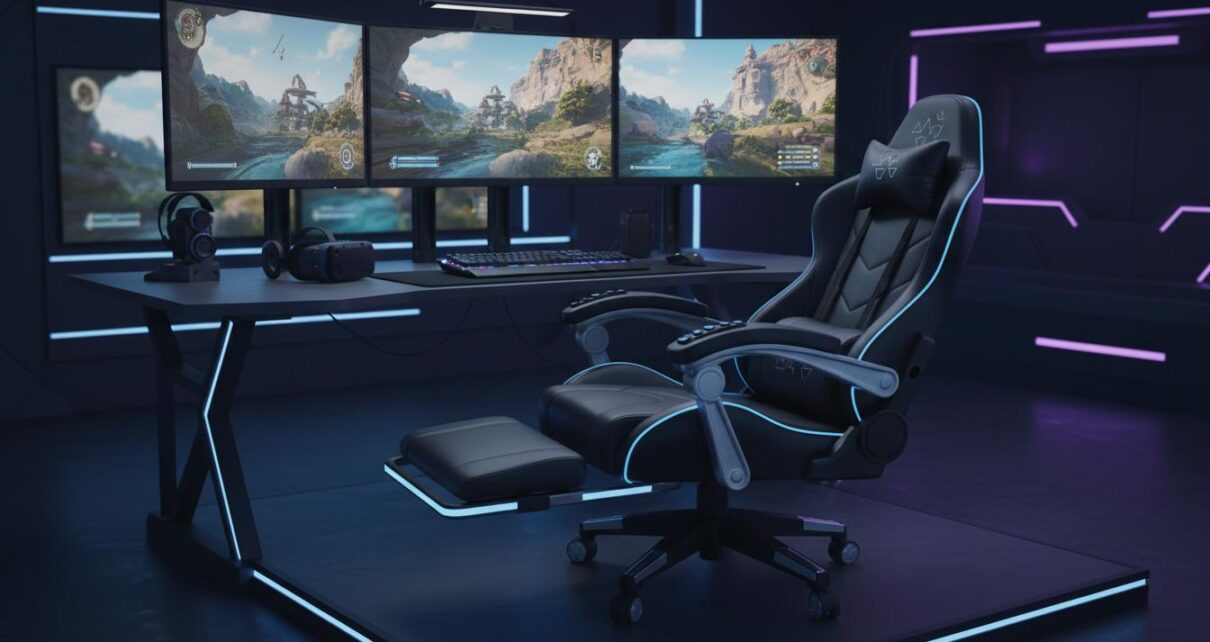
A good gaming chair can turn a long session from a sore-back slog into a smooth run. But there’s more to it than bright colours and bucket seats. This guide explains what a gaming chair is, how the features actually support your body, which types suit different setups, and how to choose one that fits you and your home in Aotearoa New Zealand.
What is
A gaming chair is a seat designed for long PC or console play, built with adjustable ergonomics—like lumbar support, recline, tilt, and multi‑directional armrests—to keep your posture neutral and reduce strain over hours of use.
Unlike many basic office chairs, a gaming chair typically adds a taller backrest to support the whole spine, a headrest, deeper adjustability, and a style that matches a gaming setup. Some lean “racing-style”; others look like refined ergonomic office chairs. The best ones focus on fit first, style second.
How it works
Ergonomics is about reducing load on your body by sharing it across joints and tissues. A gaming chair helps you hold a neutral posture while still moving often.
- Lumbar support: Fills the natural curve in your lower back so your spine doesn’t collapse into a slouch. Built-in, adjustable, or via a cushion.
- Seat height and depth: Thighs level or slightly downward, feet flat, knees near 90°. Seat depth lets you sit back without the front edge cutting into calves (a 2–4 cm gap behind the knees is ideal).
- Armrests (2D/3D/4D): Set height, width, depth, and angle so elbows rest at about 90°, shoulders relaxed, wrists straight on mouse/keyboard or controller.
- Tilt and recline: Dynamic movement matters. A synchro-tilt or multi-tilt keeps your hips open (100–120° is a sweet spot) and lets your back change angles, reducing static fatigue.
- Headrest: Supports the base of the skull when you lean back, relieving neck muscles during menus, cutscenes, or breaks.
- Foam and frame: Cold‑cured foam distributes pressure; a steel/aluminium frame and a certified gas lift (Class 3/4) add stability and durability.
- Upholstery: PU leather wipes clean but runs warm; fabric and mesh breathe better—useful in humid summers.
- Casters and base: PU-coated wheels glide on hard floors; nylon wheels suit carpet. A five‑star base prevents tipping while you tilt or swivel.
Types / examples
Not every gaming chair looks like a race car seat. Match the style to your setup, size, room, and climate.
Racing-style PC gaming chair
High back, bucket sides, bold colours. Good for desk gaming and streaming setups. Look for adjustable lumbar (ideally built-in) and 3D/4D armrests.
Ergonomic office-style gaming chair
Cleaner lines, often with synchro-tilt and better seat shaping. Great if you work-from-home by day and game by night.
Mesh gaming chair
Ventilated seat/back—excellent for breathability in warmer, humid regions. Firm sit, precise support, minimal heat build-up.
Console recliner / floor rocker
Lower seating for living rooms. Suits controller play and big-screen sessions. Prioritise neck and lower-back support.
XL or heavy-duty gaming chair
Wider seat, taller back, and higher weight rating (often 150–180 kg). Check foam density and gas-lift class.
Compact or armless models
Smaller footprint for apartments or shared spaces. Pairs well with narrow desks; loses some adjustability.
| Type | Best for | Key features | Typical NZ price (incl. GST) | Pros | Cons |
|---|---|---|---|---|---|
| Racing-style PC | Desk setups, streaming | High back, 3D/4D arms, recline 90–135° | $250–$800+ | Immersive look, strong adjustability | Can run warm; side bolsters may pinch wider frames |
| Ergo office-style | Work + play | Synchro-tilt, shaped seat, built-in lumbar | $350–$1,200+ | Excellent posture support, subtle design | Costs more; fewer “gamer” aesthetics |
| Mesh | Humid climates, long sessions | Breathable mesh, firm lumbar | $450–$1,400+ | Cool and supportive | Firmer feel; mesh quality varies |
| Console recliner/rocker | Living room play | Lower seat, head/neck focus | $200–$700 | Relaxed posture, space to lounge | Not ideal for desk use or typing |
| XL / heavy-duty | Taller or heavier users | Wider seat, higher rating (150–180 kg) | $450–$1,000+ | Sturdier build, better fit | Heavier, needs more space |
Pros and cons
Pros
- Posture support: Lumbar, armrests, and tilt reduce back, shoulder, and wrist strain.
- Focus and comfort: Less fidgeting and fatigue during long sessions.
- Adjustability: One chair can fit multiple users in the household.
- Durability: Strong frames, denser foam, and certified gas lifts last longer if you buy well.
- Style: Complements a gaming rig or streaming backdrop.
Cons
- Heat: PU leather warms up; fabric/mesh is cooler but can stain.
- Bulk: Tall backs and deep seats need space; not always flat‑pack friendly for small cars.
- Price: True ergonomic models cost more than basic office chairs.
- Quality variance: Cheap copies look similar but skimp on foam, frame, and warranties.
- Assembly: Expect 20–40 minutes with an Allen key; heavy parts may need two people.
How to use or choose
What to look for (quick checklist)
- Fit to body: Seat height around 42–55 cm suits most; ensure a 2–4 cm gap behind knees when seated back.
- Seat width and bolsters: Avoid tight thigh or shoulder squeeze; XL models for broader builds.
- Lumbar support: Prefer adjustable built-in over flimsy pillows; test the range.
- Armrests: At least 3D (height, width, depth); 4D adds angle—great for mouse-heavy play.
- Tilt and recline: Lockable multi‑tilt or synchro‑tilt encourages movement; smooth tension adjustment is key.
- Upholstery: Fabric/mesh for breathability; PU for easy wipe-down; genuine leather lasts but costs.
- Foam density: Cold‑cured or high-density foam resists flattening; avoid overly soft seats.
- Weight rating and gas lift: Choose a rating above your weight with a safety margin (15–20%).
- Base and casters: Metal base and PU wheels for hard floors; consider a chair mat on carpet.
- Warranty and support in NZ: Look for clear local parts/service and Consumer Guarantees Act compliance.
Step-by-step setup for better posture
- Set seat height so feet rest flat and knees are near 90°, thighs level or slightly downward.
- Adjust seat depth so there’s a 2–4 cm gap behind your knees when your back is fully against the backrest.
- Dial in lumbar support to gently fill the curve of your lower back—firm but not pushing you forward.
- Raise armrests to meet your elbows at roughly 90°, shoulders relaxed. Slide them in/out so forearms rest without splaying.
- Set tilt tension so you can lean back smoothly and return without effort; aim for a 100–120° open hip angle for long sessions.
- Position monitor top at or slightly below eye level, an arm’s length away; keep keyboard/mouse close.
- Take micro‑breaks: stand, stretch, or walk for one minute every 30–45 minutes.
New Zealand-specific tips
- Climate: For humid North Island summers, mesh or breathable fabric helps. In cooler regions, PU or leather feels warmer.
- Space: Many Kiwi homes have compact offices—measure desk height (often 72–75 cm) and armrest clearance.
- Retailers: Common NZ options include PB Tech, Mighty Ape, Playtech, and Noel Leeming. Try in person when possible.
- Delivery: Chairs are bulky. Check North/South Island shipping, rural delivery surcharges, and return logistics.
- Consumer rights: Under the Consumer Guarantees Act, products must be of acceptable quality and last a reasonable time. Keep receipts and warranty info.
FAQ
Are gaming chairs actually good for posture?
Yes—when they fit you and are adjusted well. Lumbar support, armrests, and tilt help maintain a neutral spine and reduce strain. A poor fit, however, negates the benefits, so sizing and setup matter more than the label.
How much should I spend in New Zealand?
As a guide: entry-level $200–$350, mid‑range $350–$700, premium $700–$1,200+. You’re paying for better foam, mechanisms, upholstery, and after‑sales support. If you sit for many hours daily, mid‑range or better is a sound investment.
Mesh, fabric, or PU leather?
Mesh is coolest and supportive but feels firm. Fabric balances breathability and comfort. PU leather wipes clean and looks sharp but can get warm in summer; a seat pad can help. Genuine leather lasts longest with care, at a higher price.
Do I need 4D armrests?
If you use a mouse intensively or swap between typing and controller often, 4D armrests are worth it. Otherwise, height and depth (3D) usually cover the basics.
What size gaming chair should I choose?
Check the brand’s height and weight guidance. As a rough rule, if you’re over about 185 cm, look for a taller backrest (80 cm+), deeper seat (50 cm+), and an XL frame. Always leave a weight margin above your body weight.
Are footrests and deep recline useful?
Great for short breaks and watching streams. For active desk gaming, keep recline moderate (100–120°) so you maintain control and visibility without neck strain.
Is a gaming chair better than an ergonomic office chair?
It depends. Many ergonomic office chairs beat cheap racing-style models. If you want top posture support with a subtle look, an ergonomic office-style gaming chair or a quality office chair is ideal. For bold aesthetics and deep recline, a gaming chair wins.
How do I clean and maintain a gaming chair?
- PU: Wipe with a damp cloth; avoid harsh solvents. Keep out of direct sun to reduce cracking.
- Fabric: Vacuum seams; spot clean with mild upholstery cleaner.
- Mesh: Dust and wipe gently; avoid snagging with clothing hardware.
- Hardware: Re‑tighten bolts after the first week, then every few months to prevent creaks.
Can I use a gaming chair for work-from-home?
Yes. Choose one with good lumbar, adjustable arms, and a balanced tilt. An ergonomic office-style or mesh gaming chair often doubles best for long workdays.
What about warranty and parts in NZ?
Look for at least 1–3 years on structure and mechanisms, with clear local support. Under the Consumer Guarantees Act, you can seek remedies if the chair fails to meet acceptable quality—keep documentation and report issues promptly.
Bottom line
The right gaming chair fits your body, encourages movement, and suits your space and climate. Prioritise adjustability, breathable materials if you run warm, and a size that supports you without squeezing. Test if you can, buy from a retailer with strong NZ support, and set it up properly—you’ll feel the difference every time you sit down to play.